Other Places


Web Portal~>

"Awen yn codi o'r cudd, yn cydio'r cwbl"
- Waldo Williams
(Awen arising from hiding, everything binding)


Showing posts with label Iolo Morganwg. Show all posts

Iolo Morganwg & The Anti-Slavery Movement

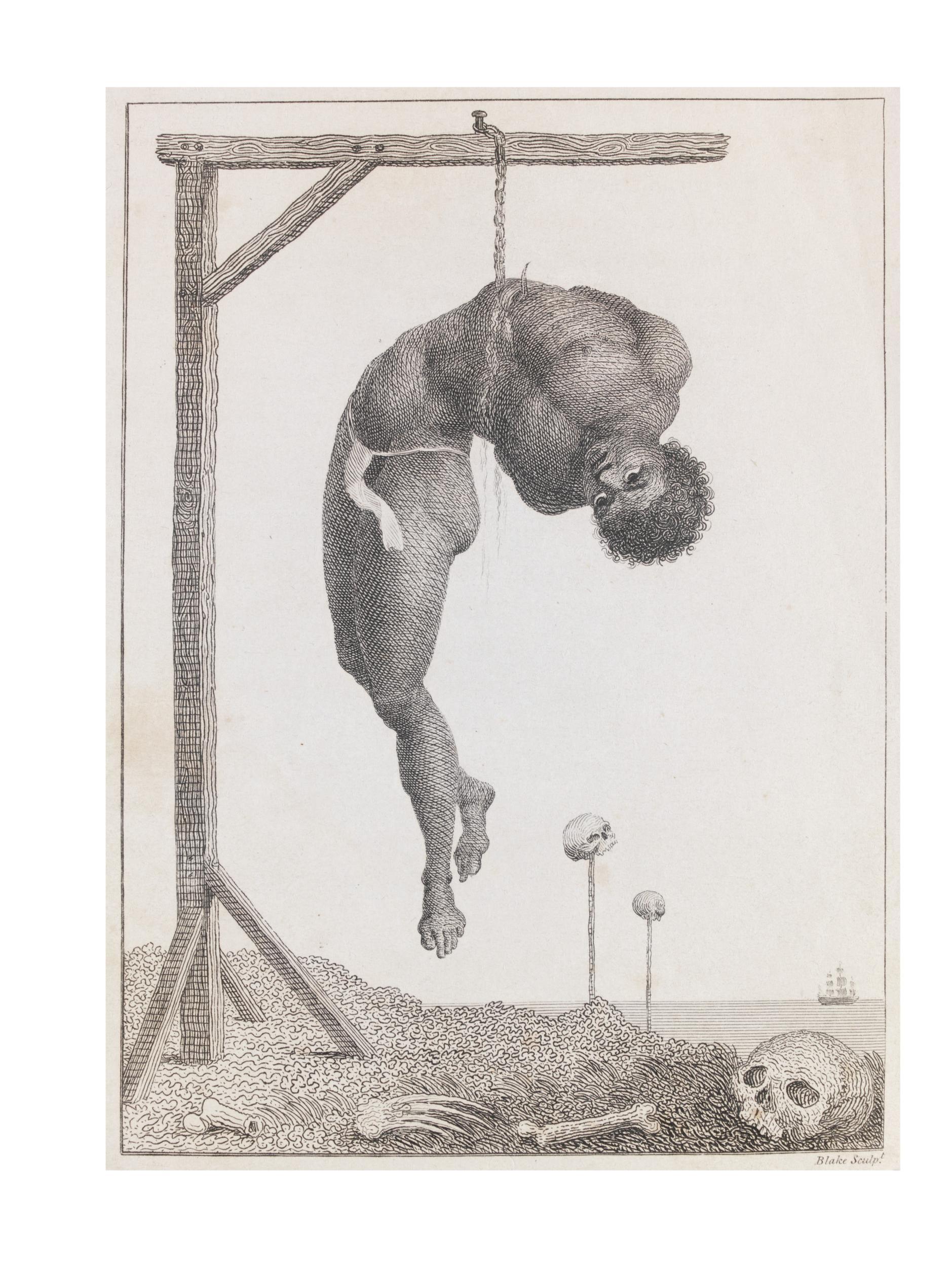
At the Midsummer Solstice in 1792 Iolo Morganwg held the first meeting of his Gorsedd of Bards on Primrose Hill in London. Iolo was in the city to promote himself as ‘The Bard of Liberty’ and to get his verse in English published which required gathering subscriptions to fund the publication. It was taking a long time to get enough subscriptions, particularly as he had resolved not to accept any from those who opposed William Wilberforce’s anti-slavery bill. He had previously rejected subscribers from Bristol - a centre of the slave trade - who had rejoiced at the defeat of one of the readings of this bill in Parliament. Iolo’s identity as a political radical went hand in hand with his promotion of the Gorsedd as the public expression of the bardic mysteries. Along with prominent members of the London-Welsh community, several political radicals were also in attendance, including Joseph Johnson, the owner of a bookshop and publisher of dissenting pamphlets, including this picture engraved by William Blake showing an executed slave:

A Slave Hung from a Gallows
©Victoria & Albert Museum


Political dissent was a dangerous business at this time following the French Revolution as the authorities in Britain feared a similar uprising and suspects were often arrested for sedition for propagating revolutionary ideas. Although Iolo was careful to omit, on advice from Johnson, some anti-royalist sentiments he had penned, some of the more conservative London-Welsh attendees at the Gorsedd were clearly dismayed when Iolo read out potentially seditious verse as part of the ceremony:


Come Liberty with all thy sons attend

We’ll raise to thee the manly verse,

The deeds inspired by thee rehearse.


Iolo was clear, as was William Blake,  that ‘Bardism’ was a medium not only of druidic expression, but also of the creed of Liberty. Part of that creed, for the radicals of this time, was the opposition to slavery and the support of William Wilberforce’s campaign to have it abolished. Verse in praise of Wilberforce was therefore also read out by Iolo as part of his address to those assembled for the Gorsedd. Other radicals that Iolo fraternised with in London at this time included the young poet S.T. Coleridge. Iolo met him again some years later when returning to Wales from another stay in London. He walked the whole way and so stopped off to rest in Bristol where he stayed with a friend. While there Iolo attended an anti slavery rally which was addressed by Coleridge and they renewed their acquaintance. At this time sugar was one of many commodities being made widely available in Britain and much of it came from slave plantations in the West Indies. One piece of advice given to the audience in the anti-slavery rally was to boycott the produce of slavery, perhaps the earliest example of the ‘fair trade’ principle. 


Later, when Iolo was the proprietor of a short-lived shop in Cowbridge in the Vale of Glamorgan he made a point of selling sugar that was, as he advertised it “untouched by human gore”. His customers, however, preferred to buy their sugar elsewhere, and without this guarantee, because it was cheaper. Iolo responded by displaying part of one of his English poems:


Behold on Afric’s beach alone,

Yon sire that weeps with bitter moan:

She, that his life once truly bless’d

Is torn forever from his breast,

And scourged, where British Monarchs reign,

Calls for his aid, but calls in vain.


But his verse had little effect, the shop failed and he was bankrupt. 


His verse in Welsh was another matter. It’s effects, one way and another, have been far-reaching. Whatever the limits of Bardism in English, Barddas encompasses all that Iolo could have hoped for it. He did not live to see that, but slavery was abolished in his lifetime.


Labyrinthine Duplicity


Iolo Morganwg is often credited with single-handedly creating many of the institutions of Welsh culture, in particular the ceremonies of the Gorsedd of Bards and the ethos of the National Eisteddfod. At least some of the sources he cited to support the results of his antiquarian research were genuine, but where there were gaps he filled them with convincing inventions based on what his intuition told him ought to be there. For many years after his death in 1826 he was regarded by some as a valuable remembrancer of lost cultural artefacts (though others had their doubts even then), but the more stringent scholarly atmosphere of the twentieth century unmasked him as a forger on a spectacular scale.


Many have been troubled by the lack of consistency of a man who was both a champion of ‘the truth against the world’, a rationalist in religion and politics, yet a romantic dreamer in his creation of celticism and revived bardic lore. But why expect consistency? As a cultural historian he has been found wanting – or, rather, found out. But it seems that we are now at sufficient historical remove from his times to begin to regard him as a part of the history that he dealt in. He can now be set in his own context as a contributor to a process of cultural reclamation rather than a lone fantasist imagining the return of the Druids. He was, after all, as Prys Morgan points out, as much the heir as the creator of the revival of interest in Welsh antiquity.

His own very real achievements both in antiquarian research and in original creation were many. The initial credibility of his forgeries of Dafydd ap Gwilym and other early poets indicates that he was, himself, not only well-read in the style and techniques of strict-metre poetry but also a talented poet in his own right. Ceri Lewis suggests that his productions – whether forged or not – are “among the most splendid creations of the Welsh muse in the eighteenth century”. Lewis relates the development of the urge to forge from early impulses to ‘polish’ or complete early poems that he had collected. Later his wish to promote theories of bardic lore and the virtues of his native Glamorgan led him to invent examples that he thought ‘ought’ to be extant to illustrate his arguments.

His relationships with Owain Myfyr (who financed the publication of The Myvyrian Archaiology of Wales), with William Owen Pughe (his unwitting associate) and with Edward ‘Celtic’ Davies (his rival) all indicate a man who was both infuriating to work with and ungrateful to those who helped him. But the fact that each of these men at points of strain had doubts about the authenticity of the early material that Iolo had ‘discovered’ only points to the fact that, when he was telling them what they wanted to hear, they were only too ready to put the doubts on one side and were therefore to some extent complicit in his deceptions.

If the very multiplicity (not to mention duplicity) of his dubious activities are seen as a distraction from the recognition of his own considerable talents as a poet, he is now being rediscovered as a free metre poet in his own right. By the time he had composed the first drafts of his Cyfrinach Beirdd Ynys Prydain while in a debtors’ prison in Cardiff, in spite of representing himself simply as ‘a journeyman mason’, he also wished to be regarded as an accomplished poet. Whiling away the time in that debtors prison, Iolo had turned his thoughts to a poet called Edward Dafydd, who had lived a hundred years earlier. Then he went on to place the real poet in a fictional eisteddfod of 1681 at which a metrical system called the ‘Dosbarth Morgannwg’ was codified. He claimed this had been in existence before the 24 ‘Cerdd Dafod’ metres codified by Dafydd Edmwnd in 1453. Iolo’s ‘cyfrinach’ (mystery) was a metrical system that included accentual as well as syllabic methods of composition. Such ‘free metres’ accorded with his own practice as a poet when he was not imitating strict metre verse.

Iolo’s extended stay in London in the 1790s was intended to promote a collection of English poems and establish his reputation as the ‘Bard of Liberty’.  Poems Lyric and Pastoral (1794) reflect new influences during his time in London. Many of the poems were revised from earlier drafts, and not always to the good, while he awaited publication in London. It seems that even his own original compositions suffered from the ‘improving’ instinct. During this period of his life Iolo rubbed shoulders with many of the emerging literary and political figures of the time. He certainly knew Coleridge and it is likely that he was at least known to Worsdsworth.

Iolo Morganwg’s labyrinth of other interests (and they ranged from agricultural theory to architecture) is exhaustively covered in the 500 pages of A Rattleskull Genius : The Many Faces of Iolo Morganwg  edited by Geraint H. Jenkins  University of Wales Press  (2005) on which the above comments are based. The book is part of a series on his life and work which reflects the desire to re-claim Iolo as a national treasure. And why not?